
blog
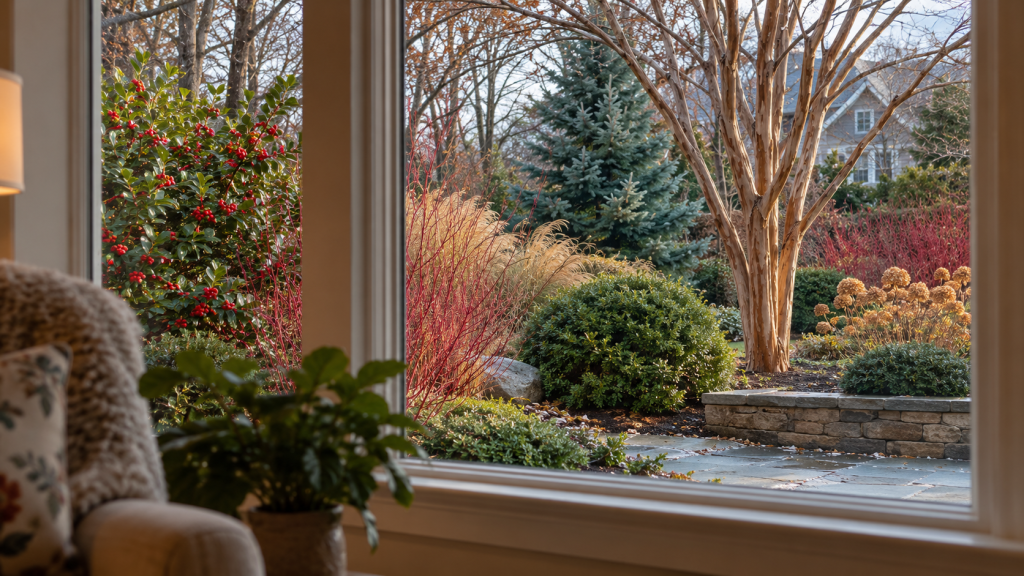
Build a Better Winter View From Inside the House
Oct
When we think about landscaping, we usually picture how the yard looks while we’re outside enjoying it. But during the colder months, much of the time we spend looking at our gardens is actually from inside the house.
October is a good time to walk through your home, look out the windows you use most often, and ask a simple question: What will I see here in January?
A few thoughtfully placed plants can make a significant difference in the winter landscape. Evergreens, colorful bark, berries, ornamental grasses and plants with interesting branching or form can keep the garden attractive long after flowers and fall foliage have disappeared.
Start With the Views You See Every Day
Look through the windows near the kitchen sink, breakfast table, family room or favorite chair. These are often more important winter viewpoints than the view from the street.
Notice areas that may look especially bare once deciduous trees and shrubs lose their leaves. Those can be excellent places to add plants that provide structure, color or texture throughout winter.
Evergreens Create the Framework
Evergreens are one of the easiest ways to give the winter garden structure. Hollies, boxwoods, arborvitae, junipers and other evergreen shrubs and conifers provide dependable color when much of the landscape is dormant.
You don’t need to fill the yard with evergreens. A few strategically positioned plants can anchor a garden bed, frame a view or provide a green backdrop for other plants with interesting winter features.
Look Beyond Green
Winter color doesn’t have to come from flowers.
Some dogwoods offer brilliant red or yellow stems. Hollies and other berry-producing plants can add bright clusters of fruit. Trees with attractive bark become much more noticeable after their leaves fall.
Even dried seed heads, ornamental grasses and the branching structure of certain shrubs can become part of the winter landscape.
Think About Shape and Texture
Without summer foliage competing for attention, plant form becomes much more important.
Upright evergreens, rounded shrubs, arching grasses and trees with distinctive branching patterns create contrast and help the landscape feel intentional rather than empty.
This is also one reason not to be too quick to cut everything down in fall. Leaving selected ornamental grasses and sturdy perennial seed heads standing can provide winter texture while also offering food and shelter for birds and other wildlife.
October Is a Good Time to Make Changes
Fall is an excellent planting season in the Annapolis area. Cooler temperatures reduce stress on newly planted trees and shrubs, while the soil can remain warm enough for root development even after the top of the plant begins going dormant.
Stop by Bru-Mar Gardens in Annapolis and let us know which part of your landscape you’re trying to improve. A photo of the view from your window can be particularly helpful when choosing plants for a specific location.
Frequently Asked Questions
What plants provide the best winter interest?
Evergreens are a natural starting point, but also consider plants with berries, colorful stems, distinctive bark, ornamental grasses and interesting branching habits.
Is October too late to plant trees and shrubs in Annapolis?
In many cases, no. Fall can be an excellent time to plant because cooler air temperatures reduce plant stress while the soil remains relatively warm. Planting timing can vary by plant and weather conditions, so ask the Bru-Mar team about the plants you’re considering.
Should I cut ornamental grasses down in fall?
Not necessarily. Many ornamental grasses provide attractive winter form and movement. They can often be left standing through winter and cut back before new growth begins in spring.
How do I choose where to add winter-interest plants?
Start inside. Look through the windows you use most frequently and identify the areas that will appear empty once the leaves fall. Those views can help determine where an evergreen, colorful shrub or specimen plant will have the greatest impact.
See Your Garden in a Different Season
A garden doesn’t have to disappear when winter arrives. With the right combination of evergreen structure, berries, bark, grasses and interesting plant forms, the landscape can provide something worth looking at twelve months of the year.
Visit Bru-Mar Gardens in Annapolis and let us help you find plants that can make your winter view a little more interesting this year—and for many winters to come.