
blog
Fall Color Beyond Mums: Plants That Shine in Annapolis Gardens
Sep
When fall arrives in Maryland, mums naturally get a lot of attention. They’re colorful, familiar, and perfect for an instant seasonal refresh. But mums are only the beginning of what an autumn garden can offer.
At Bru-Mar Gardens, we encourage Annapolis-area gardeners to think beyond a few weeks of fall flowers and consider plants that provide lasting color, texture, pollinator value, and even year-round interest.
Our Annapolis climate is especially well suited to this approach. Bru-Mar gardeners have traditionally planted for USDA Zone 7b conditions, while the updated 2023 USDA Plant Hardiness Zone Map now places much of the 21403 area in Zone 8a. That relatively long growing season gives us plenty of choices for extending the garden well beyond summer.
Asters: Classic Fall Flowers With Pollinator Power
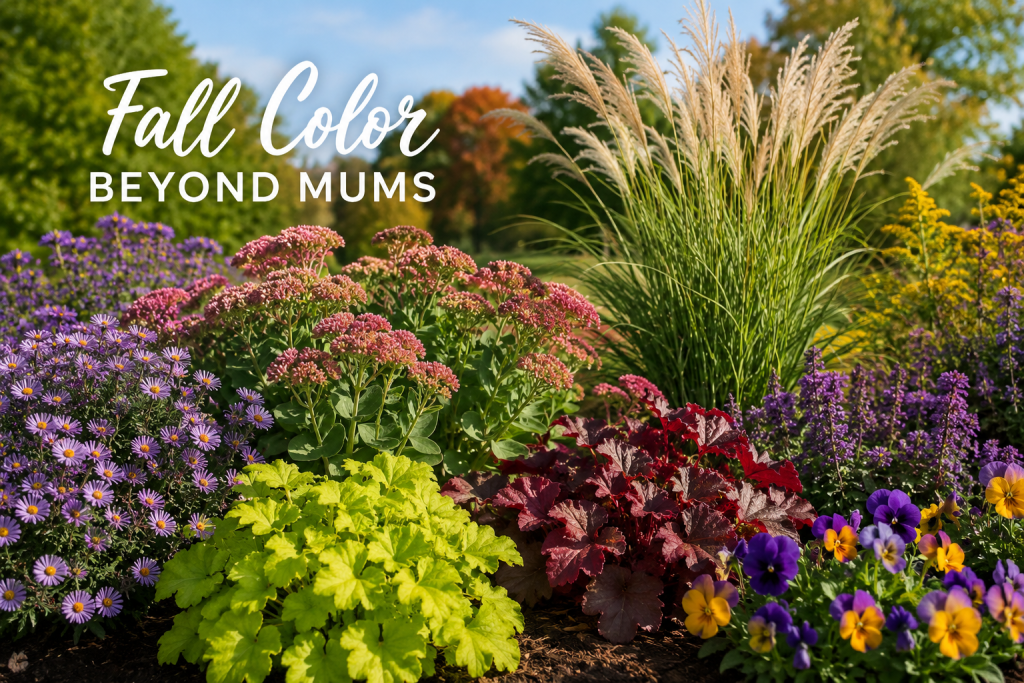
Asters are among the best perennial alternatives to mums. Their masses of daisy-like blue, lavender, purple, pink, or white flowers often appear just when many summer plants are beginning to fade.
They are especially valuable because bees and butterflies continue looking for nectar late in the season.
Plant asters in a sunny perennial bed, mixed border, or pollinator garden where they can return and grow fuller year after year.
Sedum: Color That Gets Better as Fall Progresses
Autumn-blooming sedums such as upright stonecrop are exceptionally dependable in Maryland gardens.
Their thick foliage looks attractive throughout summer before large flower heads mature into shades of pink, rose, bronze, and burgundy. Even after flowering, the dried seed heads can provide attractive winter structure.
Sedum prefers sun and well-drained soil and is an excellent choice for gardeners who want something attractive without a lot of maintenance.
Ornamental Grasses: Movement, Texture and Fall Color
Flowers aren’t the only way to create an interesting fall landscape.
Ornamental grasses can become some of the most dramatic plants in the garden during September and October. Their foliage may turn shades of gold, bronze, red, or burgundy, while airy flower plumes catch the low autumn sunlight.
Look for options such as switchgrass, fountain grass, little bluestem, or other varieties suited to your particular location.
Many ornamental grasses remain attractive well into winter, giving the garden structure long after frost has finished the annual flowers.
Heuchera: Let the Foliage Do the Work
For partially shaded gardens, colorful foliage can sometimes outperform flowers.
Heuchera, commonly called coral bells, comes in an extraordinary range of leaf colors including burgundy, caramel, lime green, silver, purple, and almost black.
They work particularly well along walkways, near patios, beneath taller shrubs, or mixed into fall containers.
Unlike a seasonal mum, heuchera can become a permanent part of the landscape and return year after year.
Native Plants for a Maryland Fall Garden
Fall is also an excellent time to add more native plants to the landscape.
At Bru-Mar Gardens, we carry American Beauties Native Plants along with other plants appropriate for Chesapeake-area gardens. Native choices can provide autumn color while also supporting local birds, bees, butterflies, and other wildlife.
Depending on your site, consider plants such as:
- Black-eyed Susan
- Goldenrod
- Native asters
- Coreopsis
- Switchgrass
- Little bluestem
Combining several varieties can create a layered garden that becomes more interesting as the season progresses.
Pansies, Kale and Cool-Season Color
If you want immediate color for a porch, patio, window box, or entryway, cool-season annuals still have an important role.
Pansies and violas tolerate cool weather remarkably well and can provide cheerful color long after heat-loving summer annuals decline.
Ornamental kale and cabbage add bold foliage and work especially well when mixed with grasses, pumpkins, evergreen accents, or trailing plants.
The result is a fall container that feels much more interesting than a pot of mums alone.
Don’t Forget Shrubs
Fall color can also come from shrubs rather than flowers.
Hydrangeas can develop beautiful antique tones as their blooms mature. Other shrubs contribute colorful foliage, berries, bark, or changing leaf color.
Because fall is also an excellent planting season in the Annapolis area, adding shrubs now gives their roots time to establish in cooler weather while the soil remains relatively warm.
Why Fall Planting Works So Well Here
Fall is one of the most productive planting seasons in central Maryland.
Cooler air temperatures reduce stress on newly installed plants, while warm soil encourages root development. Trees, shrubs, grasses, and perennials planted during fall can begin establishing themselves before winter and often emerge stronger the following spring.
Continue watering new plantings regularly until the ground becomes cold, particularly during dry stretches.
Build a Fall Garden That Lasts
The best fall gardens aren’t built around a single plant.
Try combining:
Flowers for seasonal color
Foliage for contrast
Grasses for movement
Shrubs for structure
Native plants for wildlife
Cool-season annuals for instant impact
That combination can keep your landscape interesting from September well into winter.
Visit Bru-Mar Gardens
Stop by Bru-Mar Gardens at 1009 Bay Ridge Road in Annapolis and let our team help you select plants suited to your sun, soil, moisture conditions, and garden goals.
With hundreds of varieties of trees and shrubs and a broad selection of annuals and perennials, there are plenty of ways to create fall color that goes far beyond mums.
Bring along a few photos of your garden if you’d like help deciding what will work best in your space.
Fall Garden FAQ
Are mums perennial in Annapolis?
Some hardy garden mums can survive winter when planted early enough and given good drainage, but mums purchased primarily for fall decoration shouldn’t always be treated as dependable long-term perennials.
How late can I plant perennials in Maryland?
Many hardy perennials can be planted well into fall while the soil remains workable. Earlier planting gives plants more time to establish roots before winter.
Should I cut ornamental grasses down in fall?
Usually, no. Leaving them standing provides winter texture and sometimes habitat for wildlife. They can generally be cut back in late winter before new growth begins.
Do fall plants still need watering?
Yes. Newly planted perennials, shrubs, trees, and grasses should receive consistent moisture until they become established, particularly during dry autumn weather.
What should I plant instead of mums?
For longer-lasting interest, consider asters, sedum, heuchera, ornamental grasses, native perennials, pansies, ornamental kale, and shrubs with colorful fall foliage or berries.